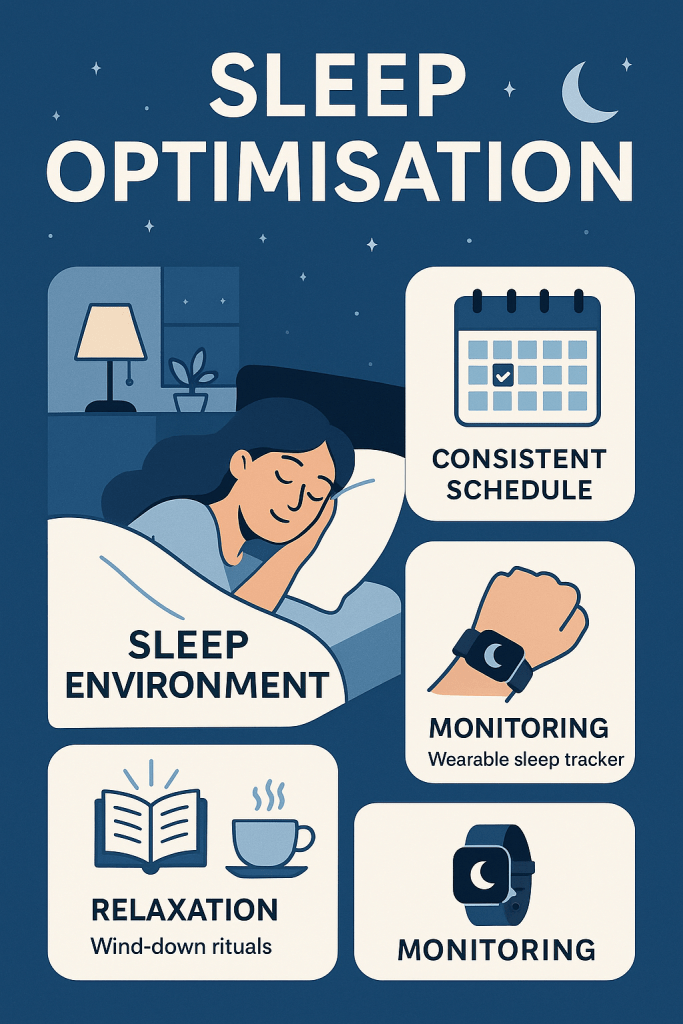
In recent years, the focus in health and wellness has shifted not just to how much we move or what we eat — but also to how we sleep. Sleep optimisation is emerging as a major wellness trend: from wearable trackers to smart light bulbs, from nap-hacks to sleep-friendly diets. According to recent health-industry reports, better sleep is becoming a cornerstone of physical, mental and metabolic well-being.
In this post, we’ll explore what sleep optimisation means, why it matters, the science behind it, and practical tips you can start applying for today.
1. Why Sleep Optimisation is Trending
1.1 Growing awareness of sleep’s importance
Health organisations have long emphasised sleep as a pillar of health. For example, the World Health Organization lists “ageing and health” and other major topics connected to sleep and rest.
1.2 Technology & wearable devices
With the rise of sleep-tracking wearables and apps, many people are now able to monitor sleep quality, sleep stages and wake times — which fuels interest in “optimising” sleep rather than just getting 7-8 hours. Reports point out growing adoption of tech and wellness trends like this.
1.3 Link to mental health, metabolism and overall wellness
Researchers increasingly link poor sleep with mood disorders, impaired cognitive function, metabolic issues (e.g., insulin resistance), and chronic disease risk. Thus, sleep optimisation is not just a “nice to have” but a health-priority.
1.4 Social & lifestyle drivers
Busy lives, screen-time, remote-work, stress and 24/7 culture contribute to sleep disruption. As a result, many are turning to practical ways to reclaim sleep quality — making this trend both timely and socially relevant.
2. What Does “Sleep Optimisation” Actually Mean?
Sleep optimisation isn’t simply “get more hours” — it’s about better quality sleep, consistent patterns, and creating an optimal environment and habits. Key components include:
Sleep hygiene: bedtime routine, dark/quiet room, avoiding screens before bed
Consistency: going to bed/waking at similar times daily
Environment: comfortable mattress/pillows, room temperature, light and noise control
Lifestyle factors: diet, exercise, caffeine/alcohol timing
Technology use: tracking sleep stages, evaluating patterns, using smart alarms / wake-windows
In short: it’s turning sleep from just a passive downtime into a consciously improved health behaviour.
3. The Science Behind It
3.1 Impacts of poor sleep
Poor sleep is linked to cognitive decline, mood disturbances and increased risk for chronic conditions.
Irregular sleep and sleep deprivation disrupt metabolism, hormone balance and the circadian rhythm.
3.2 Benefits of optimised sleep
Better concentration, memory and mental clarity
Improved mood regulation and reduced irritability or anxiety
Enhanced physical recovery (especially if you exercise)
Better immune function and potentially lower chronic-disease risk
3.3 Emerging research & trends
The adoption of AI and digital health in monitoring sleep and even forecasting sleep issues is growing.
Wellness trends are emphasising “sleep as performance” — not just rest.
Gut health, fasting, and other lifestyle habits are being linked to sleep quality, creating a broader wellness ecosystem.
4. Practical Tips: How You Can Optimise Your Sleep Starting Now
4.1 Establish a consistent routine
Go to bed and wake up at roughly the same time every day (even on weekends).
4.2 Create a sleep-friendly environment
Cool, dark, quiet room
Remove or minimise screen light 30–60 mins before bed
Use blackout curtains, ear guards or white-noise if needed
4.3 Mind what you eat & drink
Avoid large meals, caffeine or alcohol close to bedtime
Some research points to beneficial nutrients and time-restricted eating (fasting windows) helping sleep and metabolism.
4.4 Use technology wisely
Wear a tracker or use an app to monitor your sleep stages or consistency
But don’t get obsessed: tracking can backfire if it raises anxiety about “perfect sleep”
4.5 Relaxation & pre-bed habits
Wind-down rituals: reading, gentle stretching, meditation
Avoid stimulating activities (intense exercise, heavy work) right before bed
4.6 Move during the day
Regular physical activity improves sleep quality — just avoid heavy workouts right before bedtime if you’re sensitive.
4.7 Address underlying issues
If you snore heavily, wake gasping, or have persistent insomnia, consult a healthcare professional — there could be sleep-apnoea or other disorders.
5. Common Mistakes & Myths to Avoid
Myth: “If I can get by in 5-6 hours, I’m fine.” — Many underestimate how sleep-deprived they are.
Mistake: Relying only on devices/tracking and ignoring lifestyle or environment.
Mistake: Using sleep aids or gadgets as a shortcut without addressing root causes.
Myth: “Compensating” for bad sleep by napping heavily during the day always works — long naps can interfere with nighttime sleep.
Mistake: Chasing “perfect sleep score” and letting anxiety about sleep itself create sleep disturbance (a phenomenon some call “orthosomnia”).
6. Why This Matters for Indian / Urban Lifestyles
In fast-paced cities like Mumbai (and elsewhere in India), screen exposure, late-night work, shift schedules and stress are common — all impair sleep.
With rising lifestyle diseases (diabetes, hypertension, obesity), optimising sleep becomes part of prevention.
Minimal cost lifestyle changes (bedtime routine, environment tweaks) can deliver high returns in wellness.
Awareness around sleep is still lower than e.g., diet and exercise — so there’s an opportunity to gain a “health edge” by focusing on sleep.
7. What to Monitor and Track
Sleep duration: aim for 7-9 hours (adjust based on your needs).
Sleep consistency: how regular are your bed and wake times?
Sleep quality: How often do you wake during the night? How refreshed you feel in the morning?
Daytime alertness/mood: Sleep affects how you feel and perform during the day.
Lifestyle signals: Are you consuming caffeine/ screens / late meals / stress-levels?
Tracking these helps you identify what works (and what doesn’t) for you.
8. Call to Action & Next Steps
Tonight: Set a consistent bedtime and remove screens 30 minutes beforehand.
This week: Choose one change to your sleep environment (e.g., blackout curtains, cooler room, ear plugs).
Over the month: Experiment with one habit (e.g., earlier dinner, 30 mins walking daily, meditation before bed) and monitor if you feel more rested in the morning.
Consider using a sleep-tracker or journal to note changes and observe patterns.
Conclusion
Sleep optimisation is more than just a wellness buzzword — it’s rooted in growing evidence linking sleep quality with physical, mental and metabolic health. With simple, practical changes you can make today, it’s one of the most high-leverage habits in modern health. If you prioritise it, you may find yourself feeling more energized, focused and resilient — all from simply sleeping better, not just longer.

 Fitness Korner